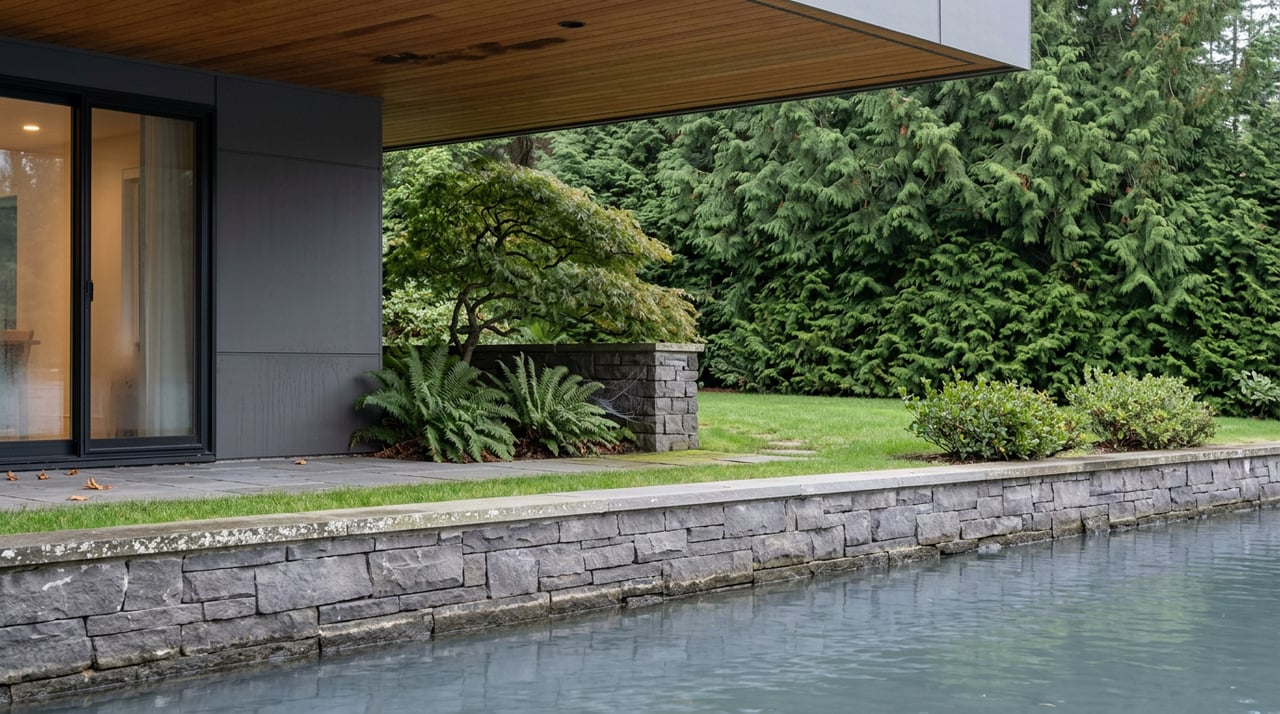
A few years ago, the City of Kirkland reviewed a permit application for boat lifts at a pier serving the Pierpointe Condominium on Lake Washington Boulevard NE. The staff report noted something buyers rarely think to check: only one pier is allowed per property under city code, and this particular pier served six separate boat slips under a single lease with the Washington Department of Natural Resources, filed as Lease Number 22-090010 through an entity called the Shoreview Dock Association. Nobody who owned a unit in that building owned the dock outright. They owned a right to use a shared structure sitting on land the state still controls.
That distinction, private dock versus shared lease, is the single biggest thing Kirkland waterfront buyers misjudge when they fall for a listing photo. A dock in the picture does not tell you what kind of dock it is, who else has rights to it, or what happens to those rights when the property changes hands. The price tag on the house tells you even less, because Kirkland's shoreline is not one market. It is a string of very different micro-markets stacked along the same 200 feet of regulated shoreline, and the dock is usually where the real complexity lives.
Waterfront listings in Kirkland use similar language regardless of what a buyer is actually getting. Some homes come with a deeded structure that belongs solely to that parcel. Others share moorage through a homeowners association, a dock association like Shoreview, or an informal joint-use arrangement between neighboring lots that predates current owners entirely.
The distinction matters at closing, not just at move-in. A shared dock under a DNR aquatic lands lease is a legal contract between the association and the state, not an asset that automatically transfers with a deed the way a fence or a shed does. If a lease needs review or renewal at the point of sale, that process runs through the Washington Department of Natural Resources' Aquatic Leasing program, and a full new lease application can take six to twelve months once DNR receives a complete filing, according to one Washington land use law firm's summary of the agency's own guidelines. Nobody wants to discover that timeline the week before closing.
Kirkland regulates far more than the water itself. The city's Shoreline Master Program governs everything within 200 feet of Lake Washington's ordinary high water mark, a line the city has fixed by ordinance at an elevation of 21.8 feet, and the same rules extend into the wetlands connected to Juanita Bay, Forbes Valley, and Yarrow Bay. If a home sits inside that band, and most true waterfront property does, any exterior work touching the shoreline, from a new bulkhead to a rebuilt dock, falls under this program rather than standard building permits alone.
The program has real teeth. In 2020, during the city's mandated periodic review of the Shoreline Master Program, a group called the Kirkland Sensible Shorelines Coalition organized against several proposed amendments, gathering more than 120 signatures and hiring both a biologist and a land use attorney to challenge the city's approach. Residents raised concerns about "peer approval permitting processes, dock-size restrictions and boathouses." The council that year ultimately kept the existing single-family pier limit of 150 feet in place, along with restrictions on the perpendicular dock sections called ells. That history is worth knowing because it shows these aren't rubber-stamp rules. They get contested, they get litigated at the Shoreline Hearings Board, and the Washington State Department of Ecology has final approval authority over any changes the city wants to make. Buyers should confirm current pier and dock dimensions directly with Kirkland's Planning and Building Department before assuming a structure can be expanded.
Here is the number that quietly determines how painful a dock repair becomes. Washington's Department of Ecology sets a dollar threshold for what counts as substantial development on a residential dock. As of August 2023, that threshold sits at $28,000 for docks replacing an existing structure of equal or lesser size in a jurisdiction with an updated shoreline program, or $13,900 for other dock construction in fresh water. Projects under that number can often move forward with a simpler exemption. Cross it, and the project typically needs review from the city, Ecology, the Washington Department of Fish and Wildlife, and sometimes the Army Corps of Engineers, each running on its own timeline.
For a buyer inheriting a forty-year-old dock, this is not an abstract policy detail. It is the difference between a repair that happens in weeks and one that stretches into a multi-agency process spanning most of a boating season. Anyone touring a home with an aging structure should ask the listing agent whether the dock has had any permitted work in the last five years, since Ecology's rules also aggregate repeat construction costs within that window toward the same threshold.
The price data makes the same point the permitting rules do. Kirkland's shoreline is not a single luxury tier. As of spring 2026, reported median listing prices varied enormously by micro-neighborhood:
| Kirkland Waterfront Area | Spring 2026 Median Listing Price |
|---|---|
| North Juanita | ~$647,500 |
| South Juanita | ~$864,500 |
| Moss Bay | ~$950,000 |
| Central Houghton | ~$2.05 million |
| Lakeview | ~$2.5 million |
| Market | ~$3.424 million |
A home in North Juanita and a home in Market both sit near Lake Washington, but they are not comparable products. The lower tiers often mean beach access, shared moorage, or proximity to the water rather than a deeded dock at the property line. The upper tiers, particularly Market and Lakeview, are where direct private frontage and larger pier allowances tend to concentrate. Juanita's cluster of homes near Juanita Beach Park and Cafe Juanita illustrates the pattern well: buyers pay for lake character and walkability there at a meaningfully lower entry point than downtown, precisely because the dock rights differ.
Citywide, the market has softened at the same time this spread has held. Over the three months ending April 2026, Kirkland's overall median sale price came in near $1.3 million, down 5.7 percent from the same period a year earlier, and homes were taking roughly twice as long to sell, 13 days on average compared to 6 days the year before. Waterfront inventory stayed thin on top of that softening, with fewer than thirty active waterfront listings citywide as of July 2026. Thin inventory plus wide price variance means buyers have less room to comparison-shop their way past a dock they haven't fully understood.
Kirkland's lakeside climate creates a specific inspection pattern that surfaces most often in Houghton and West of Market. Wood decks, covered patios, and lower level entries facing northwest accumulate moisture intrusion over years of exposure near the water. Deck replacement costs in these transactions have run $40,000 to $60,000, and that figure has become the centerpiece of inspection negotiations sellers did not see coming. Anyone touring a waterfront home built more than fifteen years ago should budget time and money for a structural inspection focused on decking and lower level moisture, not just the standard whole-house report.
The scale of demand for Lake Washington waterfront extends well beyond single-family homes. In May 2026, the Kirkland waterfront property anchored by Anthony's HomePort restaurant sold for $46 million, a commercial parcel with roughly 35,000 square feet of office space and a marina of about 118 slips, a jump from the $28 million the same property brought in 2015. The brokerage that handled the sale pointed to how rarely income-producing waterfront assets on this lake come to market at all. Residential buyers are competing for a similarly scarce resource, just at a smaller scale.
Does a shared dock automatically transfer to a new owner when a Kirkland waterfront home sells? Usage rights tied to a homeowners association or dock association typically transfer with the property, but a DNR aquatic lands lease is a separate legal contract with the state. Buyers should confirm the lease's status and any transfer requirements before closing.
How long does shoreline permitting typically take in Kirkland? It depends heavily on scope. Work under Ecology's substantial development threshold can move through an exemption process relatively quickly. Anything above that threshold, or any new lease with DNR, can take months, with DNR lease applications running six to twelve months from a complete filing.
Who has final say over Kirkland's shoreline rules, the city or the state? Both. The city writes and administers its Shoreline Master Program, but the Washington Department of Ecology holds final approval authority over any amendments, and the state's Shorelines Hearings Board can review disputes.
A dock is one of the few features in a home purchase that looks simple in a photo and turns out to be governed by three separate layers of government. Kirkland's shoreline has real regulatory teeth, real price variation by block, and real inspection patterns that only show up once someone is standing on the deck with a moisture meter. Buyers who ask about the dock before they ask about the kitchen tend to have a much easier closing.
If you are comparing Kirkland waterfront properties and want someone to pull the permit history, the DNR lease status, and the inspection patterns for a specific address before you write an offer, the Pavone Kinzler Team can walk through it with you. Reach out for a free home valuation and local market plan built around the property you're actually considering, dock included.
3933 Lake Washington Blvd NE, Suite 100 Kirkland WA 98033
3933 Lake Washington Blvd NE, Suite 100 Kirkland WA 98033