Two stations on the same rail line are telling buyers two completely different stories about where Bellevue is headed.
At Wilburton, cranes are arriving on top of former car lots. At South Bellevue, the station sits next to a nature park and a wall of single-family zoning that isn't moving anytime soon. Both stops are on the 2 Line. Both get called "transit-oriented" in listing copy. Only one of them is actually building anything.
That gap matters more than most of the generic "buy near light rail, watch your equity grow" advice circulating right now. The real question for anyone shopping the Eastside isn't whether a listing sits near a station. It's what the city has decided that station area is allowed to become.
In June 2025, Bellevue rewrote the zoning code for Wilburton, a roughly 300-acre stretch east of I-405 that had spent decades as the city's auto row. The new code, paired with what local developers call the MFTE "Supercharger," a multifamily tax exemption sweetener, made dense residential construction pencil out in a neighborhood that previously sent almost all of its land to car dealerships and office parks.
Developers noticed immediately. By April 2026, panelists at the Eastside Real Estate Symposium reported that applications had been filed for more than 2,300 housing units inside that 300-acre footprint since the rezone passed, a volume that outpaced the roughly 2,000 units filed across the entire city of Seattle over the same stretch.
Read that again: a single Bellevue neighborhood is out-permitting all of Seattle. That's not a market responding to scarcity. That's a market responding to an incentive.
The specific projects back up the number. American Capital Group has applications in for two towers alone: a 378-unit building called Brierwood Apartments, replacing a strip mall at 12001 NE 12th Street, and a separate 449-unit project at 120 116th Ave NE on the site of the former AutoNation Chrysler Dodge Jeep Ram dealership, which closed in February 2025. Alliance Residential's Broadstone East Wilburton, a 10-story, 442-unit building, cleared design review in late April 2026 and is eyeing a late 2026 groundbreaking. The KG Wilburton Master Development Plan, a 6.63-acre, three-phase proposal, would add roughly 1,397 units and an office tower on the old dealership row.
Layered on top of the housing is public infrastructure that's arriving ahead of the buildings rather than after them: the Grand Connection, a bridge planned to link Wilburton directly to downtown Bellevue, and the Eastrail corridor's Wilburton Trestle, partly funded by a $7.5 million Amazon contribution, targeted for a summer 2027 opening. Wilburton is being built as a neighborhood, not just upzoned as a parcel.
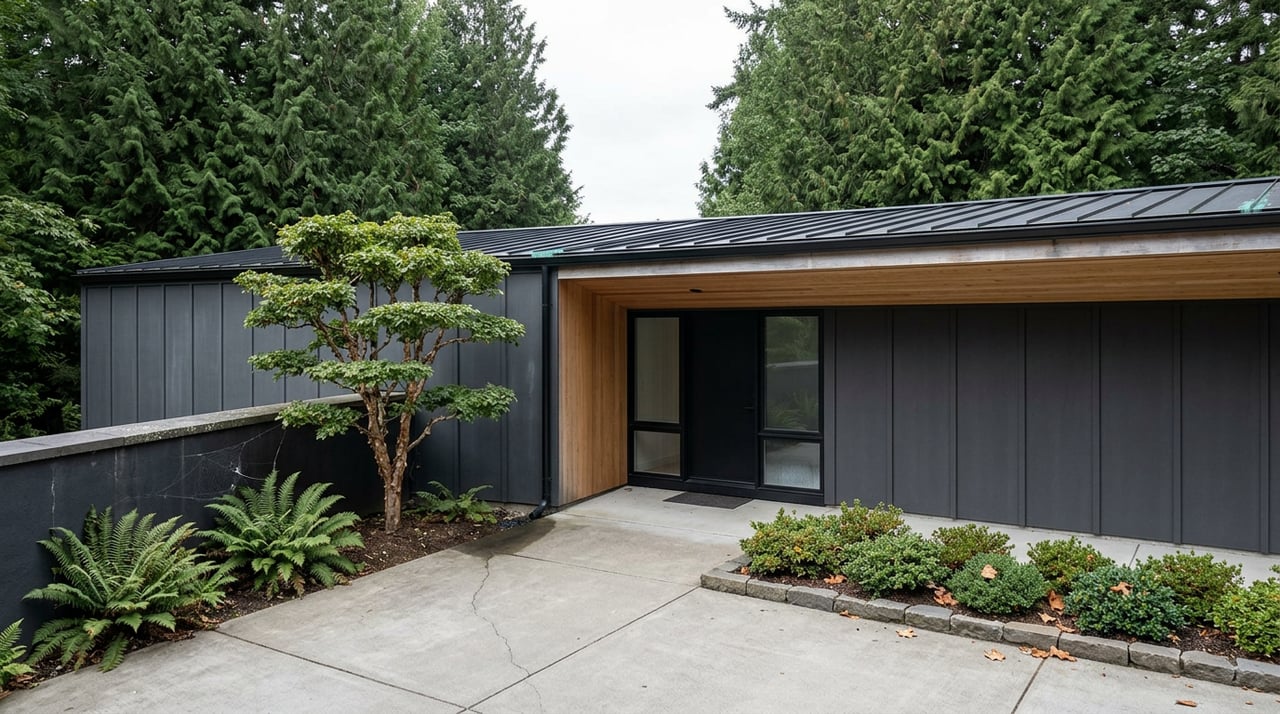
Three stops down the line, South Bellevue tells the opposite story. It sits next to Mercer Slough Nature Park, and it's hemmed in by single-family zoning that the city hasn't touched. Housing growth there is not expected anytime soon, regardless of how many trains stop at the platform.
Mercer Island offers a preview of what "light rail without a zoning change" actually produces. Despite two decades on transit planners' maps, the island's Town Center has added just 549 new homes near its station. A stop on the line doesn't rezone a neighborhood by itself. Something has to change the rules first, and in most of Bellevue, nothing has.
This is the piece that gets lost when a listing description leans on "steps from light rail" as a selling point. The phrase describes a location. It says nothing about whether that location is legally permitted to add the supply that would either soften new-construction pricing or, absent any zoning change, leave existing scarcity fully intact.
Here's where the two stories reconnect to actual numbers. Rental data from 2026 shows Bellevue's submarkets already pricing this difference in. Downtown Bellevue rents run around $3,209 a month on average, reflecting a corridor with limited new land and executive-level demand. The combined Factoria/Wilburton submarket runs in the $2,828 to $3,103 range, a corridor in transition where new supply is landing in real time. Crossroads and Woodridge, further from the rail corridor, sit lower still, around $2,127 to $2,207.
That spread isn't randomly distributed. It's the market pricing in exactly the zoning story above. Downtown Bellevue stays expensive because land there is scarce and mostly built out. Wilburton sits inside a submarket with a real but comparatively lower average than downtown, in part because thousands of new units are entering the pipeline at once, which tends to hold new-construction pricing in check even as the neighborhood's character changes around it. A buyer paying a "transit premium" in Wilburton in 2026 is buying into a construction zone, not a finished, scarcity-locked neighborhood.
For a single-family buyer eyeing South Bellevue or a similarly zoning-locked pocket, the calculation runs the other direction. No rezone means no supply response, which means whatever scarcity already exists in that submarket has fewer offsets on the horizon. The 2 Line's full cross-lake connection, which opened March 28, 2026 and now puts Bellevue about 20 minutes from the International District, is a genuine amenity for those homes. It just isn't going to be joined by hundreds of new units next door.
| Bellevue submarket | Zoning status (2026) | Avg. rent (2026) | What's actually happening |
|---|---|---|---|
| Downtown Bellevue | Built out, limited new land | ~$3,209/mo | Scarcity-driven pricing, light rail tunnel open since 2024 |
| Factoria/Wilburton | Wilburton rezoned June 2025 + MFTE incentive | ~$2,828–$3,103/mo | 2,300+ units filed in Wilburton since rezone; construction-phase pricing |
| South Bellevue | Locked by single-family zoning + park | Not broken out separately | Station open, but no rezone means no supply response |
| Crossroads/Woodridge | Limited transit proximity | ~$2,127–$2,207/mo | Lower entry point, less exposed to station-driven change |
Before treating any Bellevue listing's transit proximity as a value signal, it's worth asking two questions that most marketing copy skips entirely.
First, has this station area actually been rezoned for higher density, or is it sitting on its original single-family or low-rise code? Wilburton's 2025 rezone is public record with the City of Bellevue. South Bellevue's zoning hasn't seen a comparable change. That single fact predicts more about the next five years of pricing than the walk time to the platform does.
Second, is the neighborhood in an active construction phase or a built-out one? A Wilburton unit purchased today is a bet on a neighborhood still filling in, with the noise, density, and undetermined final character that implies, alongside real upside if the buildout matches the city's stated goal of 15,000 homes over the next two decades. A Downtown Bellevue condo is a bet on an already-scarce, already-priced-in location. Neither bet is better on its face. They're just different bets, and the same phrase, "near light rail," gets used to describe both.
Does living near a light rail station guarantee a home will appreciate faster? Not on its own. Mercer Island's Town Center has had station access for years and added only 549 new homes in two decades because its zoning never changed. Appreciation potential tracks the local zoning and incentive structure around a station at least as much as it tracks distance to the platform.
Is Wilburton a good long-term bet given all the construction? It depends on the buyer's horizon. The 2,300-plus units filed since the June 2025 rezone will take years to fully deliver, and public infrastructure like the Grand Connection bridge and the Eastrail Trestle is targeted for 2027. Buyers comfortable with a neighborhood still under construction may find real upside as the buildout matures. Buyers who want a finished, low-change environment now should look elsewhere.
Why does South Bellevue rent data not show up separately from other submarkets? Its limited redevelopment activity means fewer new listings and transactions to generate a distinct trend line. That absence of data is itself informative. It reflects a submarket where the housing stock has changed relatively little.
If you're weighing a Wilburton pre-construction unit against an established South Bellevue property, or trying to figure out which side of a rezone line your next home falls on, that's exactly the kind of station-by-station read the Pavone Kinzler Team does for every Eastside client. Reach out for a free home valuation and local market plan before you assume any two "light rail adjacent" listings are the same bet.
3933 Lake Washington Blvd NE, Suite 100 Kirkland WA 98033
3933 Lake Washington Blvd NE, Suite 100 Kirkland WA 98033